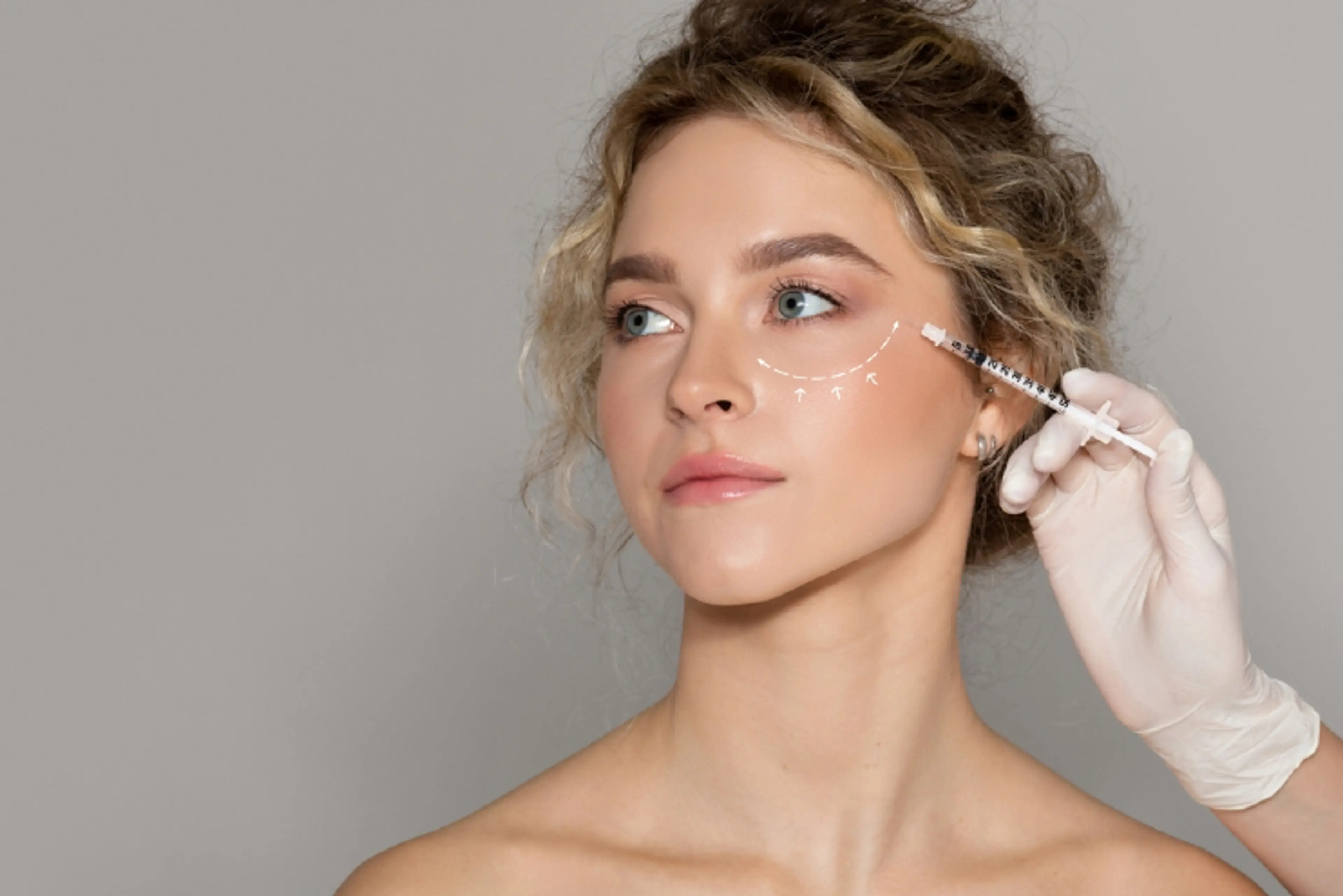
The eye area is one of the first regions to reveal age, fatigue, or genetic hollowness. Whether someone wants to look brighter, friendlier, or more youthful, the under-eye region plays a major role in overall facial expression. Two of the most frequently requested treatments in Korea—Love Band (Aegyo-Sal) Surgery and Under-Eye Fillers—both improve the lower eyelid area, yet they target completely different aesthetic concerns.
Patients often ask us at RNWOOD Plastic Surgery in Apgujeong, Seoul:
“Which one looks more natural?”
“Which one will age better?”
“Do I need love bands or do I need volume correction?”
The answer depends entirely on your anatomy, your age-related changes, and the specific effect you want under your eyes. In this detailed guide, we explain the differences, the benefits, the limitations, and how to choose the most natural-looking option for your face.

1. Understanding the Lower Eyelid Anatomy

1.-understanding-the-lower-eyelid-anatomy
To understand the naturalness of each procedure, it helps to know what the lower eyelid region actually consists of. Beneath the eye, there are three key layers that affect how youthful or tired the face appears:
  1. The Love Band (Aegyo-Sal)
    • A youthful bulge created by the orbicularis oculi muscle, located directly beneath the lash line.
    • Seen when smiling.

    • Adds charm and friendliness.

  2. The Tear Trough / Hollowness Region
    • The depression below the bulge, near the cheek junction.

    • Deepens with age, genetics, or volume loss.

    • Causes shadows and “tired eyes.”

  3. Orbital Fat Pads
    • Can protrude downward with age, creating puffiness or bags.

    • Must be managed carefully to avoid unnatural results.

Love Band Surgery enhances the upper part of the under-eye.
Under-Eye Fillers improve the lower part (tear trough).

Understanding these distinctions helps determine which option will look most natural for you.


2. What Is Love Band (Aegyo-Sal) Surgery?

2.-what-is-love-band-(aegyo-sal)-surgery

Love Band Surgery is a micro-surgical procedure that enhances the natural youthful bulge immediately beneath the lower eyelashes. This procedure is extremely popular in Korea because it creates a soft, expressive, friendly appearance.

How It Works

how-it-works
  • A small amount of fat is placed, grafted, or repositioned beneath the lash line.

  • Sometimes performed with micro-incisions or through the inner eyelid.

  • Mimics the natural muscle fullness of younger faces.

The Purpose

the-purpose
  • Restore or create the subtle “smile muscle” fullness.

  • Add expressiveness and charm, making the eyes look brighter.

  • Avoid filling the tear trough, which is a different aesthetic goal.

Who Benefits Most

who-benefits-most
  • Patients with naturally flat under-eyes

  • People who feel their eyes look tired, expressionless, or “empty”

  • Younger patients seeking youthful definition

  • Older patients whose love bands have faded with age

Longevity

longevity
  • Permanent (when using fat grafting or repositioning)
  • Does not migrate

  • Ages naturally with your facial expressions

Love Band Surgery adds structure where youthful fullness naturally exists—making it inherently suited for natural-looking enhancement when done correctly.


3. What Are Under-Eye Fillers?

3.-what-are-under-eye-fillers

Under-Eye Fillers target deeper hollowness—not the lash-line area. They are designed to smooth tear troughs and minimize shadows.

How It Works

how-it-works
  • Hyaluronic acid (HA) filler is injected into the tear trough region.

  • Adds gentle support and volume.

  • Reduces the sharp transition between lower eyelid and cheek.

The Purpose

the-purpose
  • Correct hollowness

  • Diminish dark circles caused by shadows

  • Create a smoother, rested appearance

Who Benefits Most

who-benefits-most
  • Patients with deep tear troughs

  • People with flat midface volume

  • Those wanting a non-surgical or reversible option

  • Younger patients with mild hollowness

Longevity

longevity
  • Lasts around 6–18 months
  • Requires maintenance

  • Can migrate over time, especially with repeated injections

  • Easily dissolved if necessary

Fillers can produce natural improvements when applied conservatively—but can also look puffy or unnatural if the anatomical need was misdiagnosed.


4. The Most Common Misconception

4.-the-most-common-misconception
Many patients come in thinking fillers will “create love bands.”
But:

Fillers DO NOT create love bands.

fillers-do-not-create-love-bands.

They fill deeper hollowness below the love band area.

Likewise:

Love Band Surgery does NOT correct tear trough hollowness.

love-band-surgery-does-not-correct-tear-trough-hollowness.

It enhances expression, not volume.

When the wrong treatment is chosen for the wrong issue, the result looks unnatural.


5. When Love Band Surgery Looks the Most Natural

5.-when-love-band-surgery-looks-the-most-natural

Love Band Surgery produces the most natural effect when:

✔ Your goal is expressiveness, not volume

your-goal-is-expressiveness-not-volume

Love bands are directly tied to emotional expression. They appear naturally when smiling, so enhancing them complements facial dynamics.

✔ You have a smooth tear trough but lack definition under the lashes

you-have-a-smooth-tear-trough-but-lack-definition-under-the-lashes

Some patients don’t need filler—they simply need subtle contour just beneath the lash line.

✔ You prefer a permanent correction

you-prefer-a-permanent-correction

Unlike fillers, which can migrate or dissolve unevenly, love band surgery ages gracefully.

✔ You want a youthful, Korean-style aesthetic

you-want-a-youthful-korean-style-aesthetic

Aegyo-sal is a natural youthful feature in many Asian faces. Restoring it looks harmonized rather than artificial.

✔ You want to avoid the “puffy under-eye filler” look

you-want-to-avoid-the-"puffy-under-eye-filler"-look

Because the procedure uses structured tissue, it doesn’t spread or shift.

When performed by a surgeon skilled in eyelid anatomy—like Dr. Minhee Ryu, who specializes in delicate, expression-preserving eyelid surgery—love bands look soft, organic, and naturally part of the eyes.

6. When Under-Eye Fillers Look the Most Natural

6.-when-under-eye-fillers-look-the-most-natural

Under-eye fillers look very natural when:

✔ You have true tear trough hollowness

you-have-true-tear-trough-hollowness

Deep grooves or sunken under-eyes respond well to subtle HA filler placement.

✔ You want to brighten shadows caused by bone structure

you-want-to-brighten-shadows-caused-by-bone-structure

Fillers lift the depressed area and soften the shadow line.

✔ You want a non-surgical or reversible option

you-want-a-non-surgical-or-reversible-option

Good for first-time cosmetic patients.

✔ You are young but genetically hollow

you-are-young-but-genetically-hollow

Young patients with strong cheekbones sometimes develop a harsh lid-cheek transition despite being youthful.

✔ You only need subtle correction

you-only-need-subtle-correction

Small amounts can look very natural; overfilling causes problems.

When applied conservatively and anatomically correctly, fillers create a smooth, refreshed appearance without altering expression.


7. When Each Procedure Can Look Unnatural (Important!)

7.-when-each-procedure-can-look-unnatural-(important!)

When Love Band Surgery Looks Artificial

when-love-band-surgery-looks-artificial
  • The enhancement is too large or too round
  • The anatomy is mismatched (e.g., you actually need tear trough correction)

  • Only one side is enhanced (asymmetry occurs)

  • There is bulging orbital fat that wasn’t addressed first

  • The lower eyelid is already puffy or swollen due to aging

Love bands should be subtle—not overly sculpted.


When Under-Eye Fillers Look Artificial

when-under-eye-fillers-look-artificial
  • Too much filler is used

  • Filler is injected too close to the lash line

  • The patient has edema or water-retentive under-eye tissue

  • The filler migrates, creating a puffy bag look
  • The Tyndall effect appears (bluish tint under the skin)

  • The patient needed surgery, not temporary filler

At RNWOOD, we often dissolve migrated filler for patients who want a cleaner, more youthful under-eye using a more anatomical method like fat repositioning or deep-plane midface lifting.


8. Which Treatment Ages Better?

8.-which-treatment-ages-better

Love Band Surgery (Aegyo-Sal)

love-band-surgery-(aegyo-sal)
✔ Permanent
✔ Moves with your natural expressions
✔ Maintains definition as you age
✔ Does not migrate
✔ Ages gracefully with no maintenance

Under-Eye Fillers

under-eye-fillers
✔ Non-surgical
✔ Reversible
✘ Can migrate with repeated injections
✘ May become puffy as skin thins
✔ Requires periodic touch-ups
✘ Can look worse over time in patients with fluid retention

For long-term naturalness, the surgical option tends to age more predictably.


9. The RNWOOD Approach: How We Determine the Most Natural Option

9.-the-rnwood-approach:-how-we-determine-the-most-natural-option
At RNWOOD Plastic Surgery, Dr. Minhee Ryu evaluates:
  • Your eyelid muscle anatomy

  • The thickness and quality of your lower eyelid skin

  • Presence of hollowness vs bulging fat

  • Midface structure

  • Facial expressions and smile dynamics

  • Your desired aesthetic style (natural, youthful, subtle, expressive)

  • Long-term aging patterns

  • Whether fillers were previously injected (and if removal is required)

Our philosophy is anatomy-driven, natural-first, and expression-preserving. We never apply a one-size-fits-all method.

In many cases:

in-many-cases:
  • If the issue is flatness under the lashes → Love band surgery
  • If the issue is hollowness → Under-eye filler or fat grafting
  • If both issues exist → Combination approach
  • If puffiness/bags exist → Lower blepharoplasty first

10. The Final Answer: Which Looks More Natural?

10.-the-final-answer:-which-looks-more-natural

Love Band Surgery looks more natural when your goal is to enhance expression, charm, and youthful eye contour.

Under-Eye Fillers look more natural when your goal is to smooth hollowness or dark circle shadows.

Each option is natural for the right anatomy.

The key to naturality is choosing the treatment that matches your structural need—not simply following trends.